
Known as “White Gold” across Asia, genuine edible bird’s nest has earned its reputation as one of the world’s most prized and luxury superfoods. For centuries, it has been revered for its rich concentration of sialic acid, Epidermal Growth Factors (EGF), essential amino acids, and vital trace minerals that support skin elasticity, immunity, and overall cellular renewal.
However, when shopping for pure bird’s nest in Singapore, first-time buyers are often surprised by the price tag. What exactly makes authentic bird’s nest so expensive?
The cost is not just a reflection of its historical prestige—it is directly driven by painstaking manual labor, biological rarity, strict quality grading, and uncompromising food safety standards. In this guide, we break down the four main factors behind the price of genuine bird’s nest and why it remains a worthwhile investment in your long-term health.
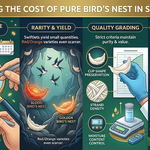
1. Meticulous, Labor-Intensive Hand Cleaning
The single largest cost factor in producing pure, chemical-free edible bird’s nest is the human labor required to clean each nest.
- Up to 2 Hours Per Nest: A raw swiftlet nest is filled with fine feathers, microscopic dust, and organic debris. Cleaning a single high-grade nest cup requires an experienced artisan 1 to 2 hours of painstaking manual tweezers work under magnification.
- 100% Chemical-Free Process: Mass-market producers sometimes use chemical solvents, bleach, or hydrogen peroxide to dissolve feathers instantly, which ruins nutrient integrity and leaves dangerous residues. Authentic, premium brands use only purified water and manual tweezers to protect the nest’s structural purity.
- Skilled Artisanship: Artisans must work with absolute precision so the delicate strands remain intact without breaking the natural shape of the cup.
2. Rarity, Harvest Timing, and Natural Scarcity
Edible bird’s nest cannot be factory-manufactured; it relies entirely on the biological nesting cycle of wild swiftlets (Aerodramus fuciphagus).
- Wild Swiftlet Behavior: Swiftlets build their nests using their own nutrient-rich saliva during the breeding season. Each nest takes the birds up to 35 to 45 days to construct.
- Strict Harvest Windows: Responsible and sustainable swiftlet farms only harvest empty nests after the baby swiftlet chicks have fledged and flown away. This natural cycle naturally limits total global supply.
- Color Scarcity: While standard White Nests are relatively accessible, rare variants like Orange Nests and Red (Blood) Nests—which derive their unique hues from natural mineral absorption and environmental conditions—are exceptionally scarce, commanding even higher market value.
3. Strict Quality Grading & Yield Loss
Not all harvested nests make it to retail shelves. Raw nests undergo rigorous sorting and grading based on shape, cleanliness, and strand density.
- High Yield Loss During Cleaning: During the manual washing and feather-picking process, up to 15% to 25% of the nest’s original raw weight is lost in residual debris and broken fragments.
- Grade A “Cup” Preservation: The intact, half-moon “Yan Wo” cup shape is the most coveted and expensive form. Preserving this natural shape requires exceptional skill during soaking and remolding.
- Moisture Content Control: Pure, high-grade dried nests are carefully dried to maintain a stable moisture level. Lower-quality sellers often leave excess moisture in the nest to artificially increase its weight, whereas premium brands ensure you pay strictly for pure dry nest mass.
4. The Daily Cost Breakdown: Is It Worth It?
While buying a box of dried bird’s nest requires an upfront investment, breaking it down into individual daily servings offers a surprisingly practical perspective.
- Upfront vs. Per-Serving Cost: A 50-gram box of high-grade dried bird’s nest typically provides around 15 to 25 individual daily servings (using 2–3 grams of dried nest per brew).
- The Specialty Coffee Comparison: When calculated on a per-serving basis, a fresh bowl of homemade, pure bird’s nest costs roughly S6toS9 per serving.
- Value Proposition: That is comparable to—or less than—the cost of a daily cafe latte or bubble tea. For the price of a daily coffee habit, you are investing directly in bioavailable sialic acid, pure collagen, and long-term immune support.
Summary: What You Are Paying For
| Price Factor | What It Means for Quality |
| Manual Hand Picking | Ensures zero chemical bleaching, zero artificial solvents, and 100% food safety. |
| Ethical Harvest Timing | Protects wild swiftlet populations while guaranteeing mature, saliva-dense nests. |
| Grade A Sorting | High concentration of long, unbroken strands with maximum expansion yield upon stewing. |
| Per-Serving Cost | A manageable daily health investment equivalent to a cup of cafe coffee. |
Experience Genuine, Uncompromised Quality with NaturalNest Singapore
When buying bird’s nest in Singapore, true value lies in purity and authenticity. Paying less for heavily bleached, sugar-laden, or filler-packed commercial products neutralizes the very health benefits you are seeking.
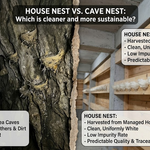
At NaturalNest.sg, we never compromise. Our edible bird’s nests are ethically sourced from clean swiftlet houses, 100% hand-picked using purified water, and completely free from bleaching agents, synthetic gums, or preservatives.
Invest in real, unadulterated wellness—explore our premium dried and freshly stewed bird’s nest collection today at NaturalNest.sg!