
Edible bird’s nest (EBN) is a precious delicacy, cherished for centuries in Singapore for its potential health benefits, ranging from skin rejuvenation to immune support. Because it is an expensive and nutritionally dense superfood, learning how to prepare it correctly is absolutely essential.
The way you handle the nest from its dried state to the final cooked dish directly impacts its nutritional value. The core bioactive compounds in bird’s nest, such as Sialic Acid and Epidermal Growth Factor (EGF), are delicate glycoproteins that can be easily destroyed by incorrect handling or excessive heat.
This article provides a definitive, step-by-step recipe on how to soak and stew dried bird’s nest, focusing specifically on preserving its valuable nutrients.
The Golden Rule: Preservation Over Speed
Traditional cooking often involves direct heat and rapid boiling. When it comes to bird’s nest, this is the quickest way to turn a nutritional powerhouse into expensive, flavorless gelatin. The golden rule of bird’s nest preparation is gentle handling and sub-boiling temperatures. This is why the method of double-boiling is non-negotiable.
Here is the correct process to prepare raw dried bird’s nest, ensuring you get the full bio-nutritional benefits of your investment.
Step 1: The Art of Soaking (Hydration)
Soaking is the first and perhaps most critical step. Dried bird’s nest needs to be fully rehydrated to expand and loosen its tightly woven strands.
1. Water Quality Matters
Do not use tap water. The chlorine and minerals in tap water can negatively affect the taste, texture, and potentially react with the delicate proteins in the nest. Always use room-temperature purified, distilled, or alkaline water. This ensures the nest hydrates cleanly without absorbing unwanted chemicals.
2. Soaking Duration
The time required depends heavily on the type and density of the nest.
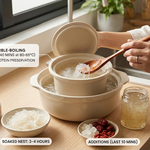
- White Bird’s Nest: For most high-quality white nests, soak for 3 to 4 hours.
- Orange and Red (Blood) Nest: These are denser and require significantly more hydration. Soak for 5 to 6 hours, or potentially overnight, checking periodically until the strands feel soft and fully expanded.
A well-soaked bird’s nest should expand 6 to 8 times its original dry weight. The water should remain mostly clear. (Cloudy or foamy water after soaking is a strong indicator of bleaching or chemical treatment).
Step 2: Final Cleaning and Post-Soak Handling
Even if you purchase pre-cleaned bird’s nest, a final quick cleaning check is necessary before cooking.
- Check for Impurities: After soaking, use a pair of tweezers to carefully remove any tiny, fine feathers or residual specks that may have been deeply embedded in the dry nest. Natural Nest’s pre-cleaned nests minimize this step, but a quick inspection ensures absolute purity.
- Rinse Gently: After removing impurities, place the soaked nest in a sieve and rinse it gently under cool, running purified water one last time. Do not squeeze or wring the nest, as this can break the delicate strands.
Step 3: The Crucial Cooking Method – Double-Boiling
Double-boiling, or water bath cooking, is the only recommended method for stewing bird’s nest. This technique uses the gentle heat of steam and surrounding water to cook the nest evenly without exposing it to turbulent boiling temperatures.
The Setup
- Inner Pot (Ceramic Jar): Place your cleaned, soaked bird’s nest into a ceramic double-boiler jar with a lid. Ceramic is preferred because it distributes heat evenly and gently.
- Add Cooking Water: Add purified water to the inner jar, just enough to cover the bird’s nest. Overfilling will result in a watery stew.
- Outer Pot: Place the inner jar into a larger stainless steel pot or electric double-boiler. Add enough water to the outer pot so that it reaches about halfway up the side of the ceramic jar.
Temperature and Cooking Time
This is where precision is vital. The active glycoproteins (EGF) and Sialic Acid in bird’s nest begin to denature and lose their effectiveness above roughly 85°C.
- Sub-Boiling Target: You are not trying to boil the water inside the ceramic jar. Your goal is to keep the temperature of the bird’s nest stew between 80°C and 85°C.
- The Outer Pot: Bring the water in the outer pot to a gentle simmer. Do not let it boil rapidly.
- Cooking Time: For most soaked white nests, 30 to 40 minutes of double-boiling at this sub-boiling temperature is ideal. The nest will be perfectly stewed—translucent, soft, and slightly jelly-like, but with the strands still intact.
Overcooking will cause the nest to completely dissolve into the liquid and destroy its nutrients. Under-cooking results in a crunchy texture.
Step 4: Timing the Additions for Nutritional Synergy
A common mistake is cooking all ingredients together from the start. Traditional additions like rock sugar, red dates, or wolfberries should only be added near the very end of the cooking process.
Why Timing Matters
Cooking sugar for an extended period at heat can facilitate the breakdown of delicate protein structures in the nest. Other ingredients can also alter the pH of the stew, affecting protein stability.
- Rock Sugar, Red Dates, or Wolfberries: Wait until the last 5 to 10 minutes of cooking before adding these ingredients. This allows their flavors to infuse gently without compromising the nutritional integrity of the bird’s nest itself.
Conclusion: Patience Yields Purest Nourishment
Preparing raw dried bird’s nest correctly requires patience, but the reward is pure, nutrient-dense nourishment. By diligently following these soaking and double-boiling procedures—prioritizing sub-boiling temperatures and precise timing for additions—you maximize the bioavailability of the precious Sialic Acid and EGF that make edible bird’s nest such a legendary wellness tonic.
At Natural Nest, we make this process easier by providing exceptionally clean, ethically sourced edible bird’s nest, ensuring that your preparation journey starts with the highest quality foundation for optimal health results.